The AI Impedance Mismatch
Different cycles. Different speeds. Uneven absorption.
Tobias Yergin · July 13, 2026
Executive Takeaway
Frontier AI now refreshes in months while the business, economic, regulatory, educational, social, and cultural cycles that must absorb it refresh in years, decades, or even generations. The gap between the two clocks is widening rather than holding steady, because capability now improves the tools that improve capability, so the source cycle keeps shortening while every receiving cycle holds its period. A compounding frequency gap behaves like an impedance mismatch: energy reflects back as resistance, dissipates as social heat, and reaches productive use at a fraction of its potential. Intelligence is therefore no longer the binding constraint on what AI delivers; absorption is.
William Ogburn coined "cultural lag" in 1922, and every generation since has rediscovered the gap, some even charting its divergence, without consolidating the work into a practical matching discipline for the interface. This paper proposes one: a vocabulary for the mismatch, a measurement program for each receiving cycle, and a design brief for institutions whose job is matching.
Two prescriptions dominate the public response and both fail, since acceleration breaks the load-bearing slowness of the receivers and patience loses to a carrier that never recedes. What remains is a bridge, a matching layer of adaptive institutions converting frontier signal into forms each cycle can absorb at its own rate. For an operator the diagnosis is immediate, since a stalled AI program is rarely short of intelligence; the program is short of managed absorption. The same widening that reads as pure risk is also a rising gradient, and the paper closes on the pair of futures a gradient allows, the arc where nothing spans it and the work where something does.
The Widening
A frontier lab now ships a capability generation in months. Downstream, enterprises absorb on planning cycles measured in quarters and years, markets reprice on earnings rhythms, labor retrains across years, regulators bind across decades, curricula refresh on accreditation cycles, and culture digests across generations. Each receiver runs at the speed its function permits, and the stack of speeds was never a problem while the source kept a period the slowest receiver could survive.
The problem arrived when the source period started shrinking on its own output. Capability now improves the tools that improve capability, with models writing the code, running the experiments, and compressing the research cycle that produces their successors. The source period contracts while receiver periods remain fixed, since the receivers hold the intervals their legitimacy requires, and a gap with one side moving and one side anchored widens structurally rather than episodically.
The compression is measured rather than only asserted. Stanford's AI Index measured training compute doubling roughly every five months and training datasets roughly every eight in its 2025 edition, and its 2026 edition recorded a leading coding benchmark rising from sixty percent to near saturation in one year while describing a widening gap between what the technology can do and what its institutions are ready to manage. Epoch AI maintains public datasets tracking model releases and capability trajectories over time, which gives the source period an empirical basis independent of any single lab's roadmap. The paper's argument does not ride on any one model family; the argument treats the frontier capability envelope as a shortening source cycle, and the public record now supports the treatment.
A Century of Diagnosis
In 1922, Ogburn's formulation of cultural lag observed that material culture changes faster than the adaptive culture that regulates it, and the observation has been reconfirmed under new names for a hundred years. Everett Rogers gave diffusion its shape and its social system in 1962. Alvin Toffler measured the psychological cost of rate itself in 1970. Larry Downes compressed the pattern into the law of disruption: technology changes exponentially while social, economic, and legal systems change incrementally.
Stewart Brand's pace layering is the closest structural relative of the multi-cycle architecture this paper draws, with fast layers of fashion and commerce at the surface, slower layers of infrastructure and governance beneath, and the slowest layers of culture and nature at the base, shock absorbed in the shear between them. W. Ross Ashby supplied the cybernetic law underneath the whole problem, since a regulator can only govern disturbances whose variety it can match. The legal literature added the pacing problem, a standing gap between emerging technologies and the oversight structures around them, and David Collingridge added the timing dilemma, in which control is easiest exactly when consequences are least knowable. Eric "Astro" Teller drew the crossing curves that Thomas Friedman carried into the mainstream, technology rising steeply past a flatter line of human adaptability, with the prescription to raise the flatter line.
A century of work has named the lag, modeled diffusion, described the pacing problem, and proposed adaptive governance, with adjacent literatures engineering real pieces of the interface, anticipatory governance, socio-technical transition studies, and institutional analysis among them. What remains underbuilt is a practical matching discipline. The discipline would measure permeability, read reflection, design buffers, govern overload, and decide where authority may safely expand, and the seat this paper takes is the consolidation.
The Governing Metaphor, Declared
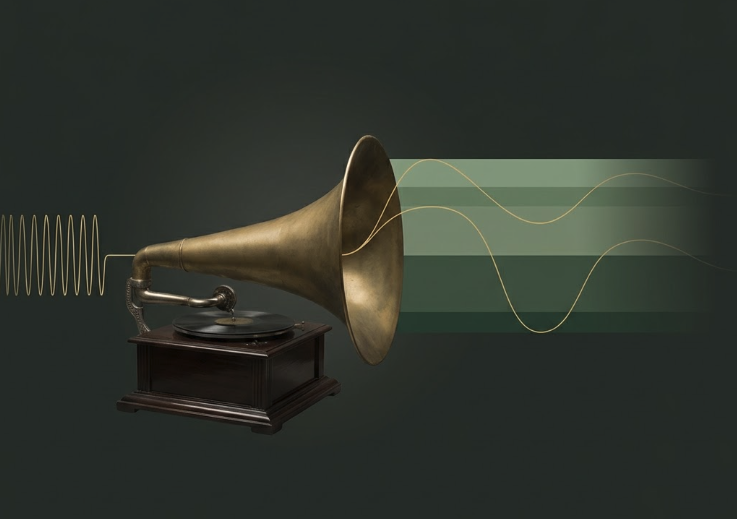
Treat AI as a signal that runs at high frequency and high amplitude and arrives at a set of receiving cycles, each with its own impedance, an opposition to change that depends on the rate at which the change arrives. Where impedances differ, part of the energy transfers, part reflects back as resistance, and part dissipates as heat, which in a society takes the familiar forms of polarization, burnout, unrest, and institutional exhaustion.
| Circuit element | Societal counterpart |
|---|---|
| Signal | Technological progress at high frequency and high amplitude |
| Impedance | A receiving cycle's resistance to change at the offered rate |
| Reflection | Resistance movements, litigation, backlash, organized refusal |
| Heat | Polarization, burnout, unrest, institutional strain |
| Transformer | An institution converting capability into receivable form |
| Capacitor | Time buffers that store and smooth abrupt change |
AI adoption reads as reckless speed and glacial delay at the same time, and the mismatch dissolves the argument by locating the two readings on different cycles. A technologist stands on the source cycle and reads capability per quarter; a school superintendent stands on the education cycle and reads absorption per accreditation period. Both readings are accurate, and the disagreement is a measurement artifact of standing on different clocks.
Source and receiver are analytical roles rather than permanent identities, because the cycles are coupled in practice. Regulation changes product design, enterprise procurement changes vendor roadmaps, labor resistance changes deployment strategy, and cultural backlash changes what firms dare ship. Reflection therefore does double duty, as evidence of the mismatch and as one of the ways slower cycles reshape the source.
The Fork
Of the two prescriptions the public argument keeps reaching for, acceleration fails first, because part of receiver slowness is load-bearing: legitimacy, deliberation, and trust carry minimum periods that no mandate compresses, and a court forced to refresh at startup speed stops being a court.
Patience fails second, because AI behaves as a carrier shift, a persistent rise in the underlying signal, rather than as a pulse that passes. A model generation, a product category, or a hype cycle rises, peaks, and decays as the profile of a single wave, while the regime beneath the waves compounds for the reasons The Widening named. Waiting buffers a pulse; against a carrier, patience converts an absorption problem into a backlog.
With acceleration capped by function and patience defeated by the carrier, every exit closes except one.
Matching remains, and the rest of the paper is the engineering of the match.
Transformer Overload and the Design Envelope
Budget cycles, election cycles, accreditation reviews, and the accretion of case law each set an institutional refresh interval, and every one of those intervals was tuned to a slower source. Ashby's law of requisite variety states the constraint underneath, since a regulator can only absorb disturbances whose variety it can match. An institution refreshing on decade cycles, receiving a month-cycle signal, is short of variety by an order of magnitude or more, and the deficit is structural rather than moral.
From the deficit follows a reframe borrowed from engineering practice. When a machine operates outside its envelope, an engineer does not convene a hearing on the machine's character; the engineer reads the overload signature and redesigns. Institutional overload has a legible signature of its own: insulation breaks down as norm erosion, heat rises as burnout and staff churn, the system trips as shutdowns and moratoria, and past a threshold the unit gets replaced, which in institutional terms means redesign under crisis conditions rather than under deliberate ones.
The reframe is generous on purpose, because a regulator or a superintendent reading this paper is being told the envelope was exceeded rather than that the office failed, and redesign requires the cooperation of exactly the people a blame frame drives into defense.
The Bridge
A gap that can be neither out-run nor out-waited must be bridged, and the bridge is a matching layer rather than a single institution, adaptive transformers standing at each boundary to convert frontier signal into a form the cycle behind the boundary can absorb at its own rate.
Machine learning already owns the word transformer, and the reuse here is deliberate. The transformer inside the model turns tokens into predictions; the transformer this paper cares about stands outside the model and turns capability into absorbed change. To keep the two apart, the rest of the paper calls the outside kind adaptive institutions.
An adaptive institution has a job description rather than a virtue list, and the job is impedance matching: take a high-amplitude, high-frequency signal, convert it into forms each receiving cycle can absorb at its own rate, read the reflections continuously, and retune the match as both sides drift. Real transformers already hold this brief, since a transformer is a matching device by construction, shifting impedance between its two sides, which is why the metaphor's two central elements, the transformer and the matching network, are one device wearing two names. The layer borrows machine speed for sensing and keeps human tempo for authority, which is how an institution of bounded variety can regulate a source of compounding variety without becoming a second copy of the problem.
Five capabilities carry the matching brief:
- Sense — continuous telemetry, with reflections treated as first-class signal.
- Interpret — reading the telemetry against declared intent instead of against last year's plan.
- Experiment — safe-to-fail trials at bounded scale, run where verification is cheap.
- Learn — evidence integrated into durable institutional memory, so the lesson outlives the staffer who learned it.
- Adapt — reconfiguring the match, structurally and on cadence, rather than episodically after a crisis.
| Legacy design | Adaptive design |
|---|---|
| Periodic sensing | Continuous sensing, reflections included |
| Long linear processes | Short modular execution cycles |
| Optimized for stability | Optimized for learning under load |
| Overload treated as anomaly | Overload treated as an operating regime with instrumentation |
| One-size processes | Context-aware pathways |
The new class carries a failure mode of its own, since an institution matched too perfectly to the technology cycle stops representing its slower constituencies. Over-matching is capture wearing the costume of competence.
Over-matching has early signatures of its own. Vocabulary drifts toward the source's, roadmaps begin mirroring vendor roadmaps, the slow constituencies stop appearing in the telemetry, and internal dissent starts sounding like latency to be optimized away. An institution that tracks those signals can correct the match before the capture completes, and the research agenda carries the open question of which signals lead.
The Diffusion Coefficient and a Measurement Program
A bridge gets managed only as well as it gets measured, so the framework assigns each receiving cycle a diffusion coefficient D, a relative permeability to technological change. D runs between zero and one. A value near one means the receiver refreshes nearly as fast as the source emits; a value near zero means the signal mostly reflects. D is dynamic, rising and falling with investment in adaptive capacity. D is heterogeneous inside each cycle, since a trading desk and a probate court sit in the same legal system at very different permeabilities. And D is coupled across cycles, because a stalled labor absorption drags the economic value that was supposed to fund it.
Each coefficient becomes operational only after a proxy is named, measured, and tested against outcomes.
| Receiving cycle | Candidate proxy for D |
|---|---|
| Economic | Time from capability demonstration to measurable sector productivity effect |
| Labor and work | Time to half-adoption within an occupational category, and retraining cycle length |
| Regulatory and legal | Years from capability demonstration to binding rule |
| Education and skills | Curriculum refresh interval from capability to assessed material |
| Cultural and social | Interval from novelty to normalization in longitudinal attitude surveys |
| Governance and policy | Ratio of procurement cycle length to capability cycle length |
No single number carries absorption, so the program names a family of measures and validates each on its own evidence.
| Measure | What it captures | Candidate expression |
|---|---|---|
| D-clock | Refresh-cycle mismatch | Source period divided by receiver period, capped at one |
| D-uptake | Depth of adoption per refresh | Share of workflows, rules, or curricula actually updated |
| D-quality | Whether adoption produces usable value | Movement in productivity, safety, and trust outcomes |
| D-effective | Composite absorption capacity | Deliberately unformalized until the components validate |
D-clock repays attention first because it is cheap, with the source period read as the interval between capability generations and the receiver period as the interval between meaningful refreshes of the receiving cycle, its rules, curricula, contracts, or norms. A regulator that refreshes every eight years against a source that refreshes every eight months carries a D-clock near 0.08, and no amount of exhortation changes that number until the refresh interval itself changes. D-clock stays the floor estimate, honest about what it omits, and the wider family exists because absorption also moves with the depth of uptake per refresh and the quality of what each refresh admits.
Measurement help already exists in climate scholarship, which has spent two decades operationalizing adaptive capacity, with working definitions carried through successive IPCC assessments and a methods literature on indicators. The AI version can borrow the scaffolding rather than rebuild it. The framework also declines to offer an outcome equation, because a function sign wrapped around a list of variable names asserts nothing testable; the measurement program above stands where an equation would.
Reflection as Information
Engineers locate a fault by launching a pulse down the line and reading the echo, whose timing gives the position of the discontinuity and whose magnitude gives the severity of the mismatch; the field calls the practice time-domain reflectometry. The reflected energy is a diagnosis delivered free by the fault itself.
Societies emit the same waveform, since a strike, a lawsuit, a moral panic, or an election swing is reflected energy carrying the same two data points, where the mismatch sits and how large it has grown. An overloaded institution treats reflection as obstruction and spends its remaining capacity on suppression, which discards the cheapest sensor the society owns; an adaptive institution reads reflection as telemetry and adjusts the match. Rising backlash, on this reading, is a measurement before it is a threat.
Reflection is telemetry rather than instruction, and an adaptive institution does not obey every echo. The echo gets classified before it gets weight: legitimate harm, trust deficit, distributional loss, procedural exclusion, incumbent protection, misinformation, or adversarial manipulation. The point is not surrender to resistance; the point is an end to discarding resistance as noise before anyone has decoded it. Who performs the classification is itself a matching question, and the appendix's last item, the audit of the matchers, applies to the reading of reflection before it applies to anything else.
Designed Delay as Societal Capacitance
Transfer has more than one objective, and the objectives conflict. Maximum-rate transfer and maximum-value transfer are different targets, a distinction every engineered system already honors. The maximum power transfer theorem says a perfectly matched load draws the most power while wasting half of it, so designers who want efficiency, stability, or headroom accept a deliberately imperfect match and a slower transfer. The same distinction holds socially, since a society tuned for maximum-rate absorption would burn half the value in the transfer and call the burning progress. The goal is not zero friction; the goal is chosen friction, and the fork's first exit stays closed for the same reason, because the slowness that acceleration would strip from the receivers is part of what makes the transfer worth having.
The paper's normative claim lives in the capacitor, the matching-network element that stores charge and releases it, smoothing spikes that would otherwise arrive as destructive transients. Time becomes capacitance only when paired with storage, and the storage may be evidence, training, trust, standards, institutional memory, or procedural legitimacy. Without storage, delay is not a capacitor at all; unpaired delay is only a resistor. Paired with storage, time performs the capacitor's office for a society: a deliberation window, a staged rollout, a review gate, or a statutory waiting period stores the shock of a change and returns the energy later as a better rule, a steadier adoption curve, and fewer reversals.
What the capacitor buys, practically, is a two-part taxonomy of friction. Capacitive friction stores and returns the energy it absorbs, while resistive friction only burns it. A waiting period that improves the eventual rule is capacitive; a waiting period that exists because an incumbent funds the waiting is resistive, and the two feel identical from inside the queue. The test is whether the delay produces a stored asset, a better standard, a trained workforce, an evidence base, or whether the delay produces heat and nothing else. Every friction owner can run the test on the queues they control.
A civilization without capacitors does not move faster; every transient lands at full amplitude, and the reversals cost more than the waiting ever did.
The First Span
Every bridge needs a first span, and the enterprise is where the first span gets built. The enterprise sits closest to the source, the first receiving cycle downstream of the frontier lab, and it holds unified authority over its own clock, since an operating model redesigns in quarters by decision rather than in decades by consensus. Verification is cheapest there too, because enterprise workflows produce measurable outcomes on timelines short enough to prove whether matching works, and a pattern proven where proof is cheap can travel to where proof is slow.
Baser Potential builds this class of institution at enterprise scale and calls the result a "System of Intelligence," and the macro claim of this paper and the operating model share one architecture. In practical terms, the System of Intelligence is an enterprise matching layer: it governs where AI enters the work, how evidence accumulates, when authority expands, and which decisions stay deliberately human.
The Control Plane fails closed and re-enters on every model call and every tool call, which is the protection relay tripping before a fault propagates. The Evidence Plane serves as the System of Record beneath the four-leg control system, and that durable record is the institutional memory that makes learning cumulative rather than anecdotal. The Proof gate, where the AI People and Operations (AI P&O) review makes the scale call, is the matching network deciding how much signal widens into the estate. Trust classes step authority down in graduated increments the way a transformer steps voltage. Epic funding, the human decision to admit and fund a new intent, and the scale call at Proof, the human decision to widen a proven pattern, are the two decisions the model never automates, deliberation capacitors placed exactly where transients would be most destructive.
The architecture is homologous rather than identical, because an enterprise differs from a society in authority and legitimacy, in exit and in accountability. Enterprise matching proves mechanisms faster, with clearer authority, cheaper evidence, and shorter feedback cycles, and what propagates outward is the validated pattern rather than the governance model itself: control planes, evidence planes, proof gates, graduated authority, and deliberately protected human decisions. The framework is the macro theory; the operating model is its existence proof.
The Operating Brief
For an enterprise reading this paper on a Monday, the framework compresses into seven moves.
- Map the source signals. Inventory where frontier capability actually enters the organization, from vendor roadmaps to employee tooling.
- Name the receiving cycles. Workflows, teams, compliance, labor, customers, vendors, and regulators each hold a refresh period worth writing down.
- Estimate D-clock at each boundary. The ratio is cheap, and the worst mismatches surface immediately.
- Classify the friction. Sort every queue and gate into capacitive or resistive using the stored-asset test.
- Read reflection as telemetry. Classify each echo before weighting it, and stop discarding resistance as noise.
- Install the matching elements. A control plane, an evidence plane, a proof gate, graduated authority, and protected human decisions form the minimum set.
- Re-tune continuously. Source and receiver drift, and yesterday's match is tomorrow's mismatch.
Propagation
Patterns proven at enterprise speed then propagate outward the way engineering standards always have, by existence proof rather than exhortation. A slower cycle rarely adopts an argument, and it routinely adopts an artifact: reference architectures move through procurement language, audited controls move through insurance pricing, and demonstrated governance moves through the rulemaking record, each a form the receiving cycle already knows how to metabolize.
The Evidence Plane makes the propagation concrete, because proofs are artifacts every slower cycle can consume. An auditor reads them as controls, an insurer reads them as priced risk, a regulator reads them as inspectable practice, and a curriculum committee reads them as teachable procedure, so evidence travels at document speed even where institutions refresh at decade speed. What travels maps into each cycle's native forms rather than transplanting whole, since a control that reads as engineering inside the enterprise must read as procedure to a regulator and as pedagogy to a curriculum committee. A bridge built in one cycle shortens the lag of its neighbors, and the shortening is the propagation.
The Gradient
The paper has run on frequency until now, and the close moves to amplitude, the second axis the signal has carried from the start, under the same discipline the metaphor callout declared. The two axes chain, because a receiver that cannot drain change at the offered rate accumulates the difference, and accumulated difference is potential. A potential difference carries no verdict on its own, since everything depends on what stands between the two points. Left unbridged while the difference grows, the medium itself eventually fails and the stored energy dumps all at once through whatever path it can ionize, which is all a lightning strike is. Placed across a matched load, the same difference drives current continuously and does work, which is all a power grid is. The gradient never chooses; the structure does.
Once the image is admitted, the societal arcs name themselves. A decade of accumulated mismatch discharges as panic legislation in the week after a disaster; a moratorium dumps pent-up adoption into gray markets; a labor rupture arrives as one strike wave rather than as ten years of managed transition; an election equalizes the potential through whatever institution happens to conduct. Each is the gap completing itself without permission, all at once, along an unchosen path, and the overload signature from the design envelope section is the same discharge running in slow motion.
The reframe changes the prescription more than the mood. A gap read only as threat argues for slowing the source, a project with no working precedent and a rising price. A gap read as a gradient argues for building the load, and the load is everything this paper specified: matching institutions, measured permeability, telemetry taken from reflection, capacitors placed by choice, and a first span already carrying current inside the enterprise. Across a matched load, the widening that reads today as pure risk becomes the measure of the prize, and the difference between the two futures is nothing about the gap and everything about what gets built across it.
A widening gap, left unbridged, arcs; across a matched load, the same difference does work.
Appendix: Research Agenda
- Proxy validation. Do the candidate proxies for D move together within a cycle, and can they be estimated from public data at national and sector grain?
- Placement. Where do matching functions live institutionally, as retrofits inside existing bodies or as purpose-built organs beside them, and who funds the organ?
- Over-matching. What early instrumentation distinguishes an institution that learned to match from an institution that was captured by the source?
- Coupling. How strongly does a stall in one receiving cycle drag the coefficients of its neighbors, and is the drag symmetric?
- Arc precursors. Which measurable signals separate a cycle that is merely lagging from a cycle approaching breakdown, and how early do the signals appear?
- Propagation limits. Which validated enterprise patterns have historically crossed into regulation and curriculum, and which artifacts carried them?
- Governance of the matchers. Adaptive institutions concentrate discretion by design, so what audits the auditors of the match?
References
- Stanford Institute for Human-Centered Artificial Intelligence. Artificial Intelligence Index Report. Stanford University, 2025 and 2026 editions.
- Epoch AI. Data on Notable AI Models. Epoch AI, accessed July 2026.
- Ogburn, W. F. Social Change with Respect to Culture and Original Nature. B. W. Huebsch, 1922.
- Rogers, E. M. Diffusion of Innovations. Free Press, 1962.
- Toffler, A. Future Shock. Random House, 1970.
- Downes, L. The Laws of Disruption. Basic Books, 2009. The law first appeared in Downes, L., and Mui, C. Unleashing the Killer App. Harvard Business School Press, 1998.
- Brand, S. The Clock of the Long Now. Basic Books, 1999.
- Ashby, W. R. An Introduction to Cybernetics. Chapman and Hall, 1956.
- Marchant, G., Allenby, B., and Herkert, J., eds. The Growing Gap Between Emerging Technologies and Legal-Ethical Oversight. Springer, 2011.
- Collingridge, D. The Social Control of Technology. Frances Pinter, 1980.
- Friedman, T. Thank You for Being Late. Farrar, Straus and Giroux, 2016. The adaptability curves are credited to Eric "Astro" Teller.
- Geels, F. W. "Technological transitions as evolutionary reconfiguration processes: A multi-level perspective and a case-study." Research Policy 31, 2002.
- Ostrom, E. Understanding Institutional Diversity. Princeton University Press, 2005.
- Smit, B., and Wandel, J. "Adaptation, adaptive capacity and vulnerability." Global Environmental Change 16, 2006.
- Intergovernmental Panel on Climate Change. "Glossary." In Climate Change 2022: Impacts, Adaptation and Vulnerability. Cambridge University Press, 2022.